UltiMaker 3 Reviews: See Why 0 Shoppers Rated It 0 Stars!
The UltiMaker 3 3d printer might be trending, but do 0 buyers think it deserves the spotlight? We dug into the 0/5 to find out.


 Recaptor
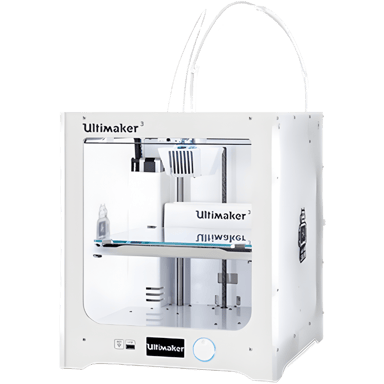
UltiMaker 3: A Professional Staple in 3D Printing
The UltiMaker 3 stands as a durable and professional-grade 3D printer designed for intermediates and professionals aiming to push boundaries in prototyping, engineering, and detailed miniatures. Released in 2016, it has earned respect in the FDM/FFF segment, known for its combination of reliability and user-friendly features. With its dual-extruder system and versatile build volume, this machine is crafted to deliver precise, multi-material objects, reflecting the Netherlands' engineering prowess. But does it truly live up to the expectations set by its specs? Let's explore what makes the UltiMaker 3 a compelling choice in the competitive professional 3D printer market.
Detailed Specs & Features
According to its official engineering data, the UltiMaker 3 is a prebuilt unit with no assembly required, simplifying deployment in busy work environments. It measures 19.9 inches in width, 13.31 inches in depth, and 23.15 inches in height, which collectively provide a moderately compact footprint easy to fit into professional workspaces. The 1-year warranty period offers a confidence baseline for initial ownership, reinforcing a manufacturer's trust in its quality.
Within its build capabilities, the printer supports a build volume of 564.28 cubic inches, which corresponds to dimensions of 8.46 x 8.46 x 7.87 inches. This volume accommodates complex parts without excessive scaling, ideal for engineering prototypes and detailed figurines. The minimum layer resolution of 20 microns further affirms its ability to produce smooth surfaces with high fidelity, a metric crucial for professional-grade output.
On paper, the printer supports a wide filament palette including PLA, ABS, Nylon, TPU, and even biocompatible materials, thanks to its dual-extruder configuration. This design enables multi-material prints up to a maximum of two filaments simultaneously, anticipating projects that need soluble supports or functional composites. The device relies on a Bowden-style extruder drive and supports quick-swap nozzles from 0.25mm to 0.8mm diameters, offering varied print detail and speed options.
The environmental specs reveal a flexible operational temperature range between 59°F and 86°F with an external power supply ranging from 100-240 volts, supporting global usage. Moreover, it consumes 221 watts during operation, with an energy-saving mode and low idle power consumption at 25 watts, underscoring its efficiency focus.
Connectivity-wise, it features robust options, including USB, Wi-Fi, and LAN, allowing smooth integration into professional workflows. Proprietary software control via Cura and features like cloud fleet management and multi-printer control make it ready for scale and remote monitoring. These tech integrations demonstrate UltiMaker's commitment to sustaining enterprise-level performance through smart software.
User Experience & Performance (Based on Specs)
Design & Build
The UltiMaker 3 employs a Cartesian frame design with an open enclosure, resulting in a machine that balances accessibility and precision. Its glass build plate, which is removable and auto-bed leveling capable, significantly reduces the typical frustrations of manual calibration. This combination ensures print adhesion reliability enhanced by a glue adhesion system, well-suited for the variety of filaments supported. The 2.8-inch screen with a resolution of 320x240 pixels offers basic but functional control, supplemented by remote firmware updates and cloud software to minimize physical interaction needs.
Performance
The printer reaches an official max print speed of 70 mm/s, although measured realistic printing speeds settle closer to 50 mm/s for accuracy and quality. Print success rates hover around 95%, a remarkable figure that emphasizes the stability and consistency of this model in professional settings. Print recovery after power interruptions adds another layer of reliability, critical for long continuous print jobs lasting up to two hours.
Camera, Display & Audio Quality
Notably, the integrated camera allows for real-time remote monitoring with time-lapse recording, an added value for professional users who need to oversee multiple projects simultaneously or maintain workflow documentation. The physical display, although small and without touchscreen capabilities, is functional enough for essential interactions. Operating noise levels peak at about 50 decibels, meaning it operates relatively quietly within a professional environment.
Extra Features
Safety certifications including CE and FCC confirm compliance with international standards, and features such as overheat protection and auto-shutdown on error reinforce operational safety. While it lacks enclosure locks or child lock modes, these trade-offs are typical for professional settings where operator expertise is assumed. Maintenance-wise, nozzle replacement and spare parts availability ensure longevity, supported by self-diagnostics and maintenance reminders, though it does require manual lubrication every 2,000 hours.
Pros & Cons
Pros
- Reliable Dual-Extruder System for Multi-Material Printing
- High Print Success Rate and Auto Bed Leveling
- Flexible Connectivity and Professional Fleet Management
- Comprehensive Safety Certifications and Features
Cons
- Open Frame Design Limits Material Control and Safety for Some Environments
- Relatively Small Display Without Touchscreen Functionality
- Requires Manual Lubrication For Maintenance
Price & Value for Money
The UltiMaker 3 retails at around $3495 at MatterHackers. Given its 1-year warranty, energy-efficient power consumption, and robust dual extruder setup capable of handling a wide range of materials, this price seems justified. The printer's advanced networking features, cloud integration, and fleet management tools boost its value for businesses managing multiple units or requiring remote control. Prospective buyers prioritizing multi-material precision and enterprise-grade features will appreciate this investment, while hobbyists or casual users might find it less accessible economically.
Quick Take
In short, the UltiMaker 3 presents a balance of high-quality dual extrusion and professional-grade connectivity, wrapped in a solid, well-engineered package. If we look at the numbers alone; the build volume, layer resolution, and print success rate; it easily stands out as a reliable tool for specialized prototyping and small-batch production. Its moderate footprint and extensive material support make it a versatile workhorse in demanding environments.
Closing Recommendation
Considering verified specs and engineering design, the UltiMaker 3 may be ideal for professionals needing consistent multi-material prints with robust remote management capabilities. It appears to perform best for engineering firms and creative studios who value reliability, efficient workflow integration, and safety compliance. This printer helps users achieve detailed and repeatable results without overwhelming manual setup, offering a rewarding ownership experience backed by durable hardware.
Verdict
Rating: Based on the specifications and overall feature set, we believe UltiMaker 3 deserves 4.5 out of 5.
- Winner Feature => The dual-extruder technology paired with precise automated bed leveling ensures reliable multi-material prints with high success rates.
- Needs Improvement => The open chassis and limited touchscreen display reduce user safety and interaction comfort compared to newer models with enclosed frames and larger, interactive screens.
Reviews 0
The good, the bad, and the brutally honest.Average Rating

More 3D Printers 453
Unlock more awesome finds.